
Estimating the labor cost of a cleaning job requires more than knowing an employee’s hourly wage.
You also need to account for labor burden, the number of cleaners assigned, and the hours each cleaner will work.
Use the free calculator below to estimate the total labor cost of a specific cleaning job before setting your price.
If you first need to calculate your employee’s true hourly cost from payroll taxes, workers’ compensation, and benefits, start with our Cleaning Business Labor Cost Calculator.
What Is Cleaning Labor Cost?
Cleaning labor cost is the total amount your business pays for the labor required to complete a cleaning job.
It includes employee wages and applicable employer-paid expenses, such as payroll taxes, workers’ compensation, and benefits.
For job costing, the key is to calculate the true hourly labor cost and multiply it by the total labor hours required—not just the time it takes to finish the job.
What Is Labor Burden?
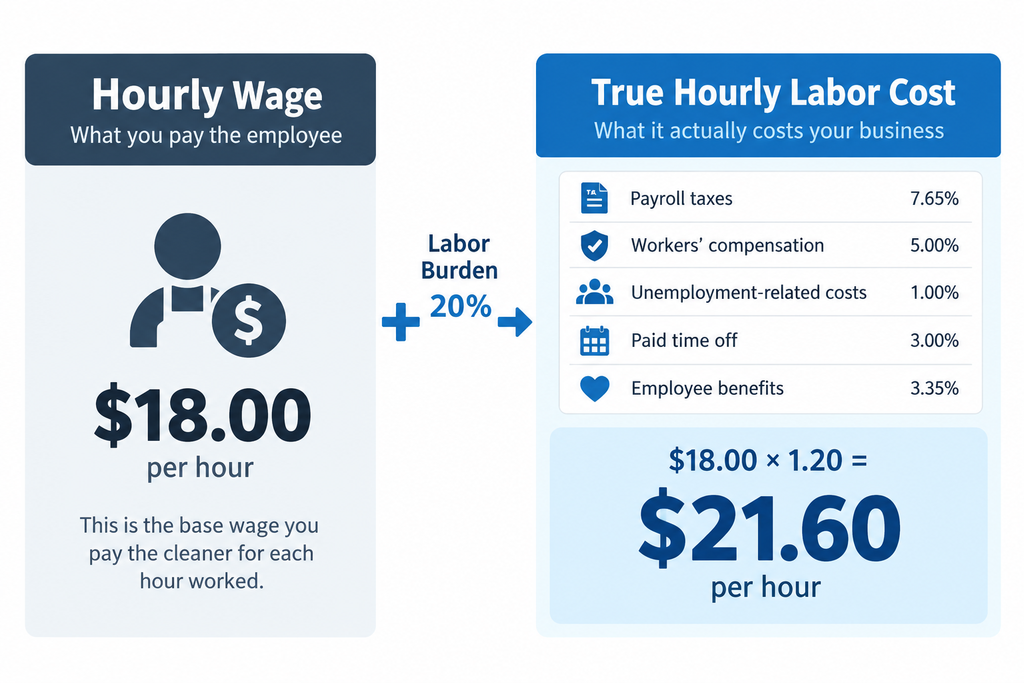
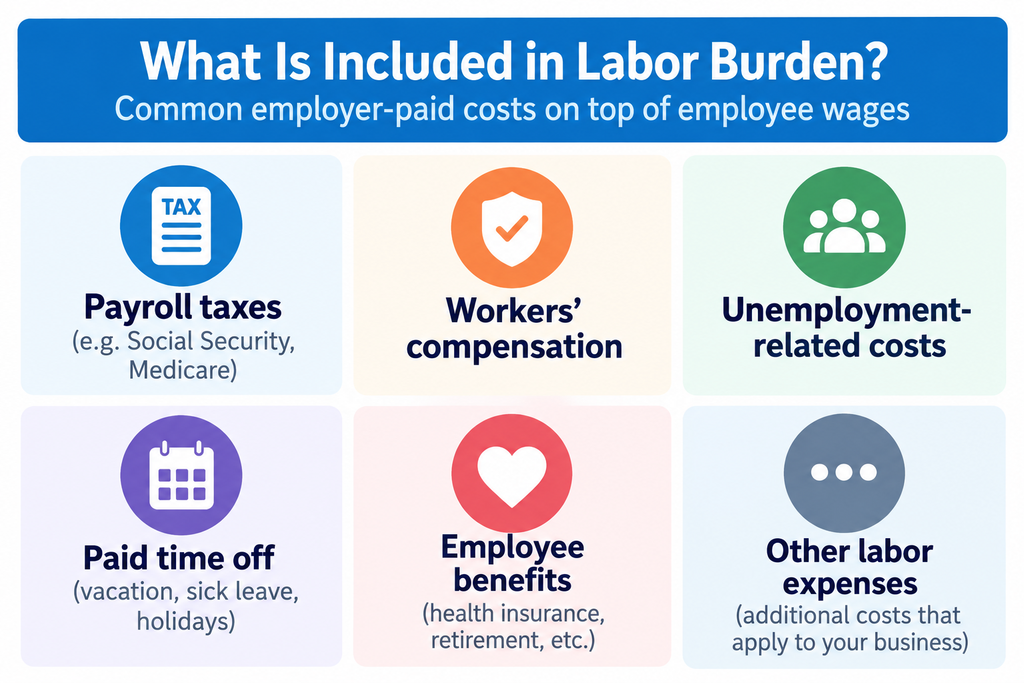
Labor burden is the additional employer-paid cost beyond a cleaner’s base wage. It may include:
- Employer payroll taxes
- Workers’ compensation insurance
- Unemployment-related costs
- Paid time off
- Employee benefits
- Other employer-paid labor expenses
Your actual labor burden depends on your business and location. Use your own costs rather than assuming a standard percentage.
How to Calculate Your Labor Burden Percentage
If you know your base wages and your additional employer-paid labor costs, you can calculate labor burden with this formula:
Labor Burden % = Additional Employer Labor Costs ÷ Base Wages × 100
For example, suppose your business pays:
- $50,000 in base wages
- $10,000 in additional employer-paid labor costs
The calculation would be:
$10,000 ÷ $50,000 × 100 = 20%
Important: Labor burden is not the same thing as profit or general business overhead.
Expenses such as advertising, office software, rent, vehicle expenses, and general administrative costs may affect your overall profitability, but they should not automatically be treated as employee labor burden.
Cleaning Labor Cost Calculator
Use the calculator below to estimate the true labor cost of a cleaning job.
Enter the cleaner’s hourly wage, your estimated labor burden percentage, the number of cleaners assigned to the job, and the hours each cleaner is expected to work.
Cleaning Labor Cost Calculator
Estimate the true labor cost of a cleaning job based on wages, labor burden, crew size, and hours worked.
Cleaning Labor Cost Formula
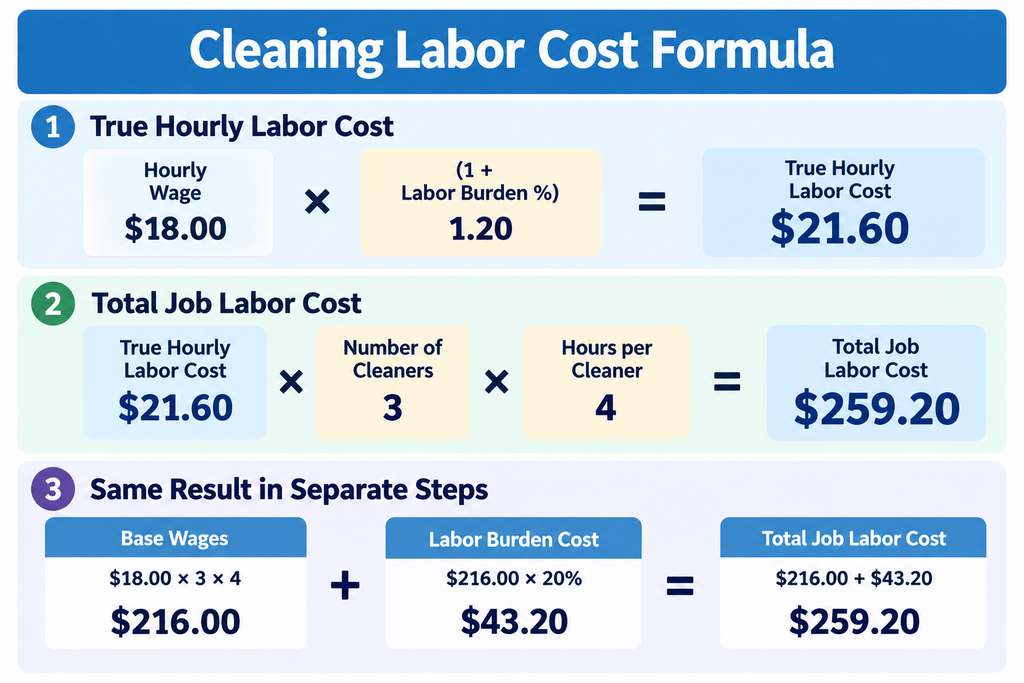
The core formula is:
True Hourly Labor Cost = Hourly Wage × (1 + Labor Burden %)
Then:
Total Job Labor Cost = True Hourly Labor Cost × Number of Cleaners × Hours per Cleaner
Why Labor Cost Matters When Pricing Cleaning Jobs
Knowing your labor cost helps prevent a common pricing mistake: confusing revenue with profit.
For example, if you charge $350 for a cleaning job and your estimated labor cost is $259.20, the amount remaining is:
$350 − $259.20 = $90.80
However, that $90.80 is not your profit. You still need to account for cleaning supplies, transportation, equipment, insurance, marketing, and other operating expenses.
To estimate your actual profit margin, use our Cleaning Business Profit Margin Calculator.
Labor Cost Percentage
Labor cost percentage shows how much of a cleaning job's revenue is spent on labor.
Labor Cost % = Total Labor Cost ÷ Job Revenue × 100
Using our example:
$259.20 ÷ $350 × 100 = 74.1%
This means approximately 74.1% of the job's revenue goes toward labor, leaving $90.80 to cover other expenses and profit.
A high or low percentage is not automatically good or bad. The appropriate level depends on your service type, overhead, pricing, and target profit.
Do Not Forget Non-Cleaning Labor
Not all paid labor time is spent cleaning. Depending on your operations, job-related labor may also include:
- Loading supplies and preparing equipment
- Paid travel between job sites
- Job setup and cleanup
- Quality inspections and paperwork
- Other paid tasks related to the job
Leaving these hours out can underestimate your actual labor cost. Include all applicable paid work time when estimating the total labor hours for a cleaning job.
Labor Cost vs. Cleaning Time
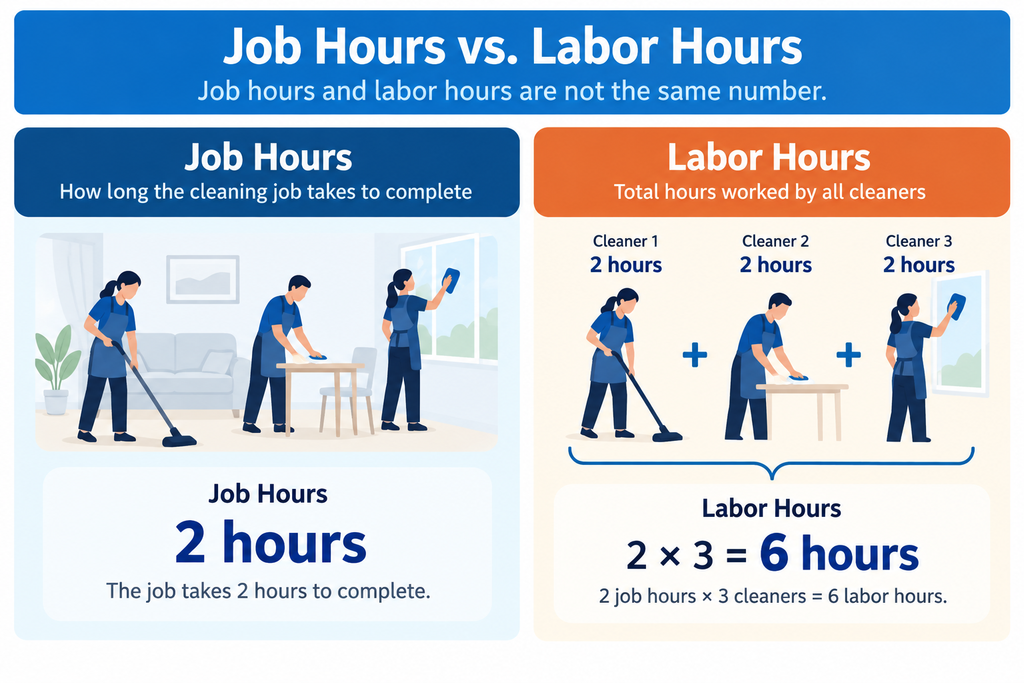
Cleaning time and labor hours are not always the same number.
That distinction is especially important when estimating jobs with multiple cleaners.
FIGURE 4 — JOB HOURS VS LABOR HOURS
How to Use Labor Cost When Setting Your Cleaning Price
Labor cost should inform your price, but it should not be the only number you consider.
A practical pricing process can look like this:
- Estimate the cleaning time.
- Calculate total labor hours.
- Calculate true labor cost.
- Estimate other job-specific costs.
- Account for business overhead.
- Set a price that supports your target profit.
- Compare the result with the market and service scope.
For a broader pricing process, see our guide on how much to charge for house cleaning.
Common Cleaning Labor Cost Mistakes
Avoid these common mistakes when estimating cleaning labor costs:
- Using hourly wages alone: Include applicable employer-paid labor expenses.
- Confusing job hours with labor hours: Multiply job duration by the number of cleaners.
- Guessing your labor burden: Base the percentage on your actual payroll and employment costs.
- Treating revenue after labor as profit: Account for supplies, overhead, and other expenses.
- Using outdated cost assumptions: Recalculate when wages, benefits, insurance, or staffing change.
Track Estimated vs. Actual Labor Cost
After each cleaning job, compare your estimates with the actual results:
- Labor hours: Estimated vs. actual hours worked
- Labor cost: Estimated vs. actual employee costs
- Job revenue: Expected vs. actual revenue
If actual labor costs consistently exceed estimates, review your crew size, cleaning time, workflow, and pricing.
Tracking these differences helps you produce more accurate estimates for future jobs.
Know Your Labor Cost Before You Set the Price
Accurate labor costing is essential for profitable cleaning jobs. Before setting a price, account for your true hourly labor cost, crew size, and total paid labor hours.
Use the Cleaning Labor Cost Calculator above to estimate job costs, compare them with actual results, and make more informed pricing decisions.