
Starting a cleaning business can be relatively affordable compared with many other types of businesses.
But “affordable” does not mean free.
Cleaning supplies, equipment, insurance, business registration, marketing, transportation, and software can all add to your startup budget. The amount you need depends heavily on whether you start as a solo residential cleaner or launch with employees and commercial equipment.
This guide breaks down the major cleaning business startup costs, shows what you may need immediately versus what can wait, and helps you calculate a realistic startup budget for your own business.
How Much Does It Cost to Start a Cleaning Business?
There is no single startup cost that applies to every cleaning business.
A solo residential cleaner who already owns a vehicle and some basic equipment may be able to start with a relatively small budget. A company launching with employees, commercial equipment, paid advertising, or dedicated vehicles may need considerably more.
Instead of relying on one headline number, think about your startup budget in three parts:
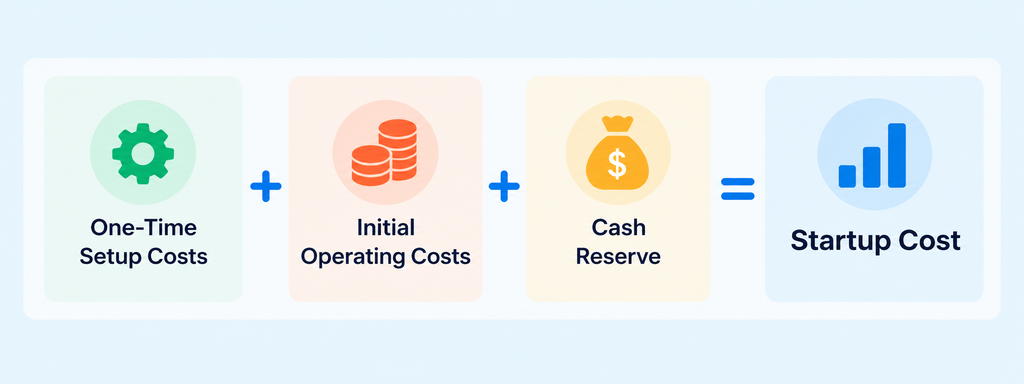
This gives you a more useful estimate than simply adding up the cost of a vacuum and cleaning supplies.
Your startup budget should answer two questions:
- How much money do I need to get ready for my first customer?
- How much cash do I need to keep operating while the business gains traction?
Main Cleaning Business Startup Costs
Your exact expenses will depend on your location, services, and business model, but most startup budgets include some combination of the following.
Business Registration and Licenses
Depending on where you operate, you may need to register your business and obtain applicable state or local licenses or permits.
Requirements and fees vary by location, so check the rules that apply where your business operates rather than relying on a generic national estimate.
Insurance
Insurance can protect your business when accidents, property damage, or other covered incidents occur.
The coverage you need can depend on your location, business structure, employees, vehicles, and the types of customers you serve. Commercial clients may also have specific insurance requirements before allowing a cleaning company to work at their properties.
Cleaning Supplies
Your initial supply list might include:
- Cleaning chemicals
- Microfiber cloths
- Sponges
- Gloves
- Trash bags
- Spray bottles
- Brushes
- Mop supplies
- Disinfectants
- Protective equipment
You do not necessarily need to buy large quantities before you have customers.
Start with enough inventory to perform the services you actually plan to sell, then replenish supplies as revenue comes in.
Cleaning Equipment
Equipment can become one of the larger startup expenses.
Depending on the services you offer, you might need:
- Vacuum cleaner
- Mop and bucket
- Cleaning caddy
- Extension duster
- Step ladder
- Carpet-cleaning equipment
- Floor-cleaning equipment
A residential cleaner can often start with considerably less equipment than a commercial cleaning operation.
Avoid buying specialized machines simply because you might need them someday. Buy equipment when the services you actually sell justify the expense.
Transportation
If you already own a reliable vehicle, your upfront transportation cost may be limited.
However, transportation still creates ongoing expenses such as:
- Fuel
- Maintenance
- Insurance
- Parking
- Repairs
- Vehicle replacement
The larger your service area becomes, the more transportation can affect the profitability of each cleaning job.
Website and Marketing
You need a way for potential customers to discover and contact your business.
Early marketing expenses may include:
- Domain and website costs
- Business cards or flyers
- Local advertising
- Online advertising
- Business directory listings
- Basic branding
You do not need an expensive brand package before getting your first customer.
Focus first on being easy to find, easy to contact, and easy to trust.
For practical customer acquisition ideas, see How to Get Clients for a Cleaning Business: 12 Proven Ways.
Cleaning Business Startup Cost Calculator
Use the calculator below to estimate how much money you need to start your cleaning business.
Enter your expected costs for each category. If a category does not apply to you, enter $0.
The calculator uses your own expected expenses rather than a generic industry average.
That matters because someone starting alone with an existing vehicle and equipment has a very different budget from someone hiring employees and purchasing commercial equipment from day one.
Use the result as your estimated amount of startup capital—not as a universal number that every cleaning business needs.
One-Time Costs vs. Ongoing Costs
One of the easiest budgeting mistakes is treating every business expense as a startup expense.
Some costs happen mainly when you launch. Others continue every month.
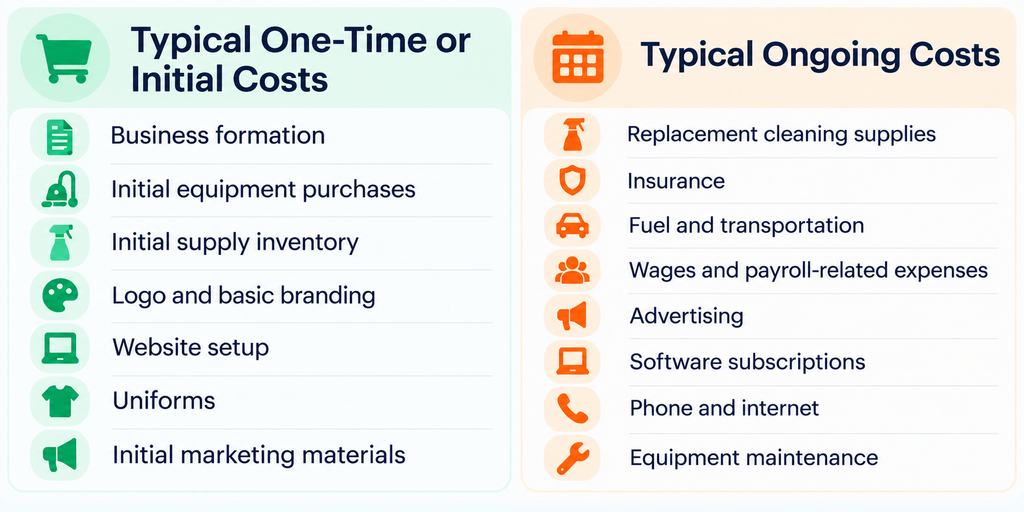
This distinction matters because having enough money to open the business does not necessarily mean you have enough money to operate it.
What Do You Actually Need Before Your First Cleaning Job?
It is easy to spend money because something makes the business feel more established.
That does not mean you need it on day one.
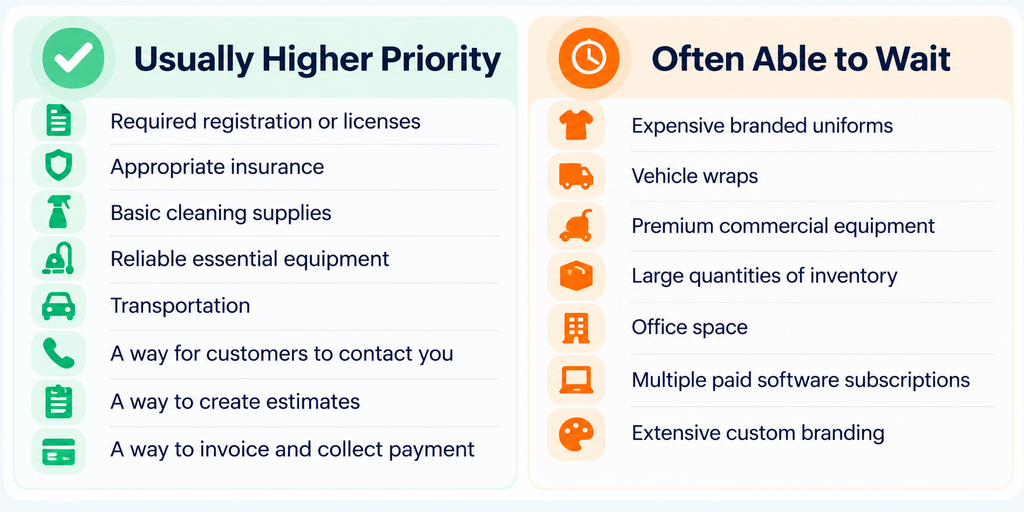
The goal is not to build the perfect cleaning company before getting your first customer.
The goal is to build a business capable of serving the first customer professionally.
Example Startup Budget: Solo Residential Cleaning Business
Consider someone starting a residential cleaning business alone.
They already own a reliable vehicle and do not hire employees immediately.
| Expense | Example Budget |
|---|---|
| Registration & licenses | $150 |
| Insurance | $500 |
| Initial cleaning supplies | $200 |
| Vacuum & equipment | $350 |
| Basic website & branding | $150 |
| Initial marketing | $250 |
| Software | $0 |
| Other expenses | $100 |
| Cash reserve | $500 |
| Total | $2,200 |
This is an illustrative example, not a universal estimate.
Your actual costs may be substantially lower or higher depending on your location, insurance quotes, equipment you already own, and the services you plan to provide.
The important part is understanding exactly where your startup money is going.
What Changes If You Start With a Small Team?
Starting with employees changes the economics quickly.
In addition to basic startup expenses, you may need to budget for:
- Recruiting
- Background checks where appropriate
- Training time
- Additional equipment
- Uniforms
- Payroll
- Payroll-related costs
- Workers’ compensation where applicable
- Scheduling and team-management software
- Additional insurance
- Greater working capital
This is why comparing a solo residential cleaner with a multi-employee cleaning company can produce misleading startup-cost estimates.
They are fundamentally different businesses.
Don’t Forget Your Cash Reserve
One of the most important numbers in your startup budget may not purchase anything.
It is your cash reserve.
Customers may arrive more slowly than expected. A customer may cancel. Equipment may need replacing. Advertising may take time to produce results.
A reserve gives the business room to absorb those situations.
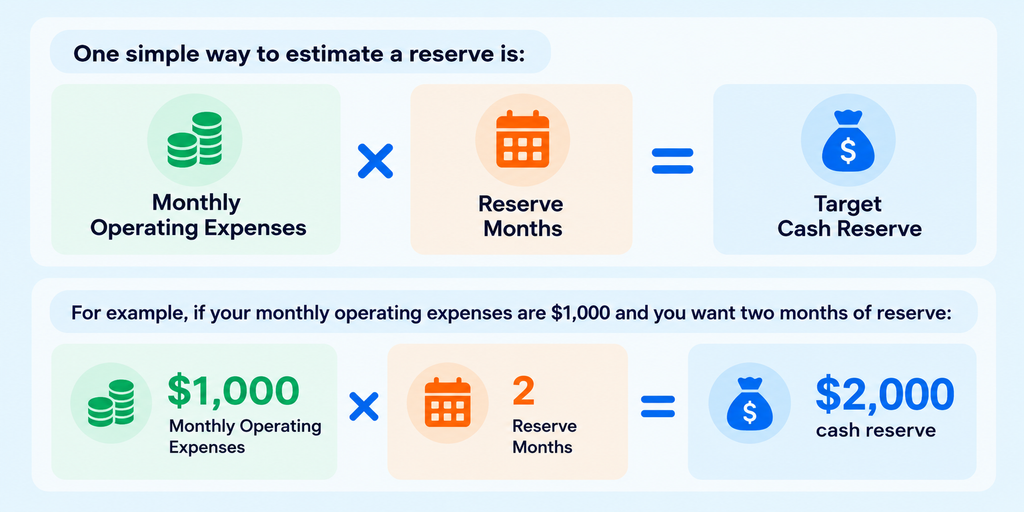
The right reserve depends on your own expenses, risk tolerance, and business situation. The important part is not assuming that every dollar of your startup budget can be spent before the first job arrives.
Startup Cost Is Only Half the Equation
Keeping startup costs low does not automatically create a profitable cleaning business.
Your prices still need to cover the cost of delivering the service.
Depending on your operation, your job economics may include:
- Labor
- Payroll-related costs
- Cleaning supplies
- Transportation
- Insurance
- Marketing
- Software
- Administrative time
- Equipment replacement
- Taxes
- Profit
Before accepting jobs, understand what you need to charge.
Use the OpsButler house cleaning pricing guide and calculator to work through your pricing.
Then use the cleaning business profit margin calculator to see how revenue and costs affect the amount you actually keep.
Should You Pay for Cleaning Business Software at Startup?
Not necessarily.
When you only have a handful of customers, a calendar, spreadsheet, and simple templates may be enough.
You can use the cleaning business estimate template to create professional estimates before investing in a larger software platform.
As the business grows, however, manual processes can become expensive in a different way: they consume time.
Software can eventually help manage:
- Leads
- Customers
- Estimates
- Scheduling
- Recurring jobs
- Employees
- Invoices
- Payments
Before paying for a platform, compare your options in Best Cleaning Business Software: 7 Tools Compared.
If scheduling is the main problem, see Best Scheduling Software for Cleaning Businesses: 7 Tools Compared.
Common Cleaning Business Startup Spending Mistakes
Buying Too Much Equipment Too Early
Buy equipment for services you actually intend to sell.
A machine that sits unused does not help your cash flow.
Spending Heavily on Branding Before Finding Customers
A professional appearance matters, but an expensive branding package does not replace customer acquisition.
Early spending should help you operate professionally or win customers—not simply make the business look larger than it is.
Ignoring Recurring Expenses
The purchase price of equipment is obvious.
Monthly insurance, fuel, software, advertising, wages, and replacement supplies can be easier to underestimate.
A business that looks inexpensive to start can still become expensive to operate.
Underpricing to Win the First Customers
Cheap pricing may attract customers, but it can also lock the business into jobs that do not produce enough margin.
Your first customers still need to make financial sense.
Hiring Before the Numbers Support It
Employees can increase capacity, but they also introduce additional costs and management responsibilities.
Make sure your pricing and customer demand support hiring before adding payroll.
Build Your Startup Budget in Three Stages
Instead of creating one giant shopping list, divide your spending into stages.
Stage 1: Before the First Customer
Spend on what is necessary to operate safely, legally, and professionally.
That generally means prioritizing the essentials required to deliver the services you are actively selling.
Stage 2: After Revenue Starts
Use early revenue to improve equipment, marketing, systems, and the customer experience.
This lets actual demand influence where you invest rather than trying to predict every future need before launch.
Stage 3: When the Business Begins to Scale
Invest in tools that become valuable when job volume and team size increase.
That may include better scheduling systems, automation, additional equipment, hiring processes, and more advanced software.
A staged approach reduces the amount of money tied up before the business has proven customer demand.
Turn Your Startup Budget Into a Working Business
A startup budget is useful only if it helps you move toward paying customers.
Once you know what you need to spend, the next steps are to:
- Decide which cleaning services you will offer.
- Calculate prices that cover your costs and target profit.
- Create a professional process for estimates.
- Use a consistent professional house cleaning checklist when delivering jobs.
- Invoice customers promptly after the work is completed.
- Track your actual costs and profit as the business grows.
- Invest in software and automation when the time savings justify the cost.
The basic operating flow becomes:
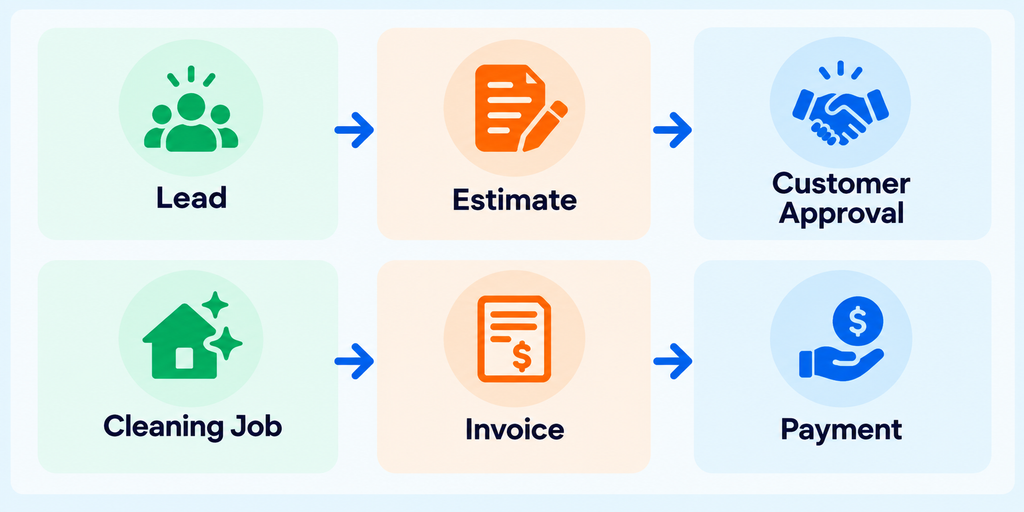
Your startup budget is the beginning of that process—not the business itself.
Final Take
There is no universal answer to how much it costs to start a cleaning business.
A solo residential operation can have a very different startup budget from a cleaning company launching with employees, commercial equipment, and a larger marketing budget.
Instead of chasing one headline number, calculate:
- What you need before your first job
- What can wait until revenue arrives
- Your recurring monthly expenses
- Your cash reserve
- The prices you need to charge
- The margin those prices produce
Use the startup cost calculator above to build your own number rather than somebody else’s.
Start with the essentials, keep unnecessary fixed costs low, and let real customer demand guide later investments.
Your startup budget should help you reach your first profitable jobs—not become another obstacle between you and your first customer.