
Starting a cleaning business can be one of the most accessible ways to build a service business.
You do not necessarily need an office, expensive equipment, or a large team to get started. Many cleaning businesses begin with one person, a small set of supplies, and a handful of local clients.
But starting cheaply and starting properly are two different things.
You still need to decide what services you will offer, understand your costs, set profitable prices, handle the basic legal and insurance requirements, find clients, and build a system for delivering consistent service.
This guide walks through the process step by step.
Step 1: Decide What Type of Cleaning Business You Want to Start
Before buying supplies or creating a website, decide what kind of cleaning service you want to build.
The two broad options are residential and commercial cleaning.
Residential Cleaning
Residential cleaning typically includes services such as:
- Recurring house cleaning
- One-time cleaning
- Deep cleaning
- Move-in and move-out cleaning
- Apartment cleaning
Residential cleaning can be attractive for a new business because jobs are often smaller and you can start without a large team.
Recurring clients can also create predictable revenue.
Commercial Cleaning
Commercial cleaning can include:
- Offices
- Retail locations
- Medical facilities
- Restaurants
- Schools
- Other business properties
Commercial contracts can be larger, but the sales process and operational requirements may also be more complex.
You do not need to offer every possible cleaning service from day one.
A focused service offering is usually easier to price, market, and deliver consistently.
Step 2: Choose Your Service Area
Your service area affects much more than marketing.
It affects:
- Travel time
- Fuel costs
- Scheduling efficiency
- How many jobs you can complete each day
- Which customers you can realistically serve
A common mistake is accepting jobs across too large an area simply because someone is willing to hire you.
Long drives between jobs can quickly reduce your effective hourly earnings.
Start with a manageable geographic area and expand only when demand justifies it.
Think in Terms of Route Density
Two $150 jobs located five minutes apart can be much more valuable operationally than two $150 jobs located 45 minutes apart.
As your client base grows, try to build clusters of customers in the same neighborhoods.
That can reduce unpaid travel time and make your schedule more profitable.
Step 3: Create a Simple Cleaning Business Plan
You do not need a 50-page business plan before cleaning your first home.
But you should understand the basic economics of the business.
At minimum, decide:
- What services you will offer
- Who your target customer is
- Where you will operate
- How you will price jobs
- How you will find clients
- What your startup budget is
- Whether you will work alone or hire cleaners
- What monthly revenue you want to reach
A simple plan gives you something to measure against instead of making every decision independently.
Set a Basic Revenue Target
For example, suppose your initial goal is:
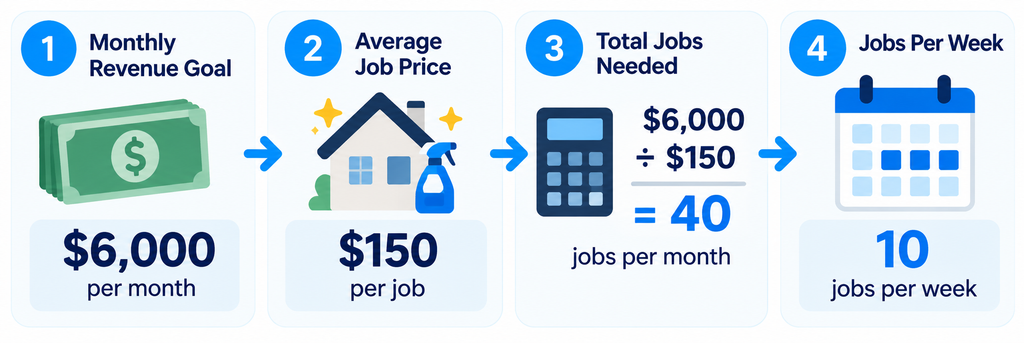
Breaking a revenue goal into jobs makes it much easier to understand what your business actually needs to achieve.
Step 4: Estimate Your Startup Costs
Cleaning businesses can often be started with relatively low overhead, but they are not free to launch.
Potential startup expenses include:
- Business registration and licenses
- Insurance
- Cleaning supplies
- Cleaning equipment
- Website and branding
- Initial marketing
- Software
- Transportation
- Uniforms
- Cash reserves
The amount you need depends heavily on how you start.
A solo residential cleaner using an existing vehicle may have very different startup costs from a business launching with employees and commercial equipment.
Use our complete guide and calculator to build your own startup budget:
Cleaning Business Startup Costs: Complete Breakdown & Calculator (2026)
https://getopsbutler.com/cleaning-business-startup-costs/
Do not spend money simply because something looks professional.
Prioritize what helps you legally operate, safely complete jobs, acquire customers, and deliver reliable service.
Step 5: Register the Business and Check Local Requirements
The exact legal requirements depend on where you operate.
Depending on your location and business structure, you may need to consider:
- Business registration
- Local business licenses
- Tax registration
- Employer requirements
- Permits
- Recordkeeping obligations
Requirements can vary by state, city, and business structure, so verify them with the appropriate government agencies for your location.
Do not assume that another cleaning company’s setup automatically applies to your business.
Keep Business Finances Separate
Once you begin accepting payments, separating business and personal finances can make bookkeeping much easier.
A dedicated business bank account can help you track:
- Revenue
- Supplies
- Equipment purchases
- Marketing expenses
- Software subscriptions
- Contractor or employee costs
- Other operating expenses
Clean financial records become increasingly important as the business grows.
Step 6: Get Appropriate Business Insurance
Cleaning businesses work inside customers’ homes and businesses.
Accidents can happen.
A cleaner could damage an expensive surface, break an item, or someone could be injured while work is being performed.
The specific coverage you need depends on your business and location, but cleaning businesses commonly investigate coverage such as general liability insurance.
If you hire employees, use vehicles for business purposes, or operate in specialized environments, additional coverage may be relevant.
Speak with a qualified insurance professional about your specific situation rather than choosing coverage based only on price.
Step 7: Buy the Cleaning Supplies and Equipment You Actually Need
It is easy to overspend on equipment before you have any customers.
Start with the tools required to perform the services you actually sell.
A basic residential setup might include:
- Vacuum
- Mop and bucket
- Microfiber cloths
- Scrub brushes
- Sponges
- Spray bottles
- Cleaning solutions
- Gloves
- Trash bags
- Duster
- Cleaning caddy
Your exact list will depend on your services and whether clients expect you to provide supplies.
Build a Repeatable Cleaning Process
Equipment alone does not create consistent results.
A checklist helps make sure the same important tasks are completed every time.
You can use our room-by-room checklist as a starting point:
Professional House Cleaning Checklist: Free Room-by-Room Template
https://getopsbutler.com/professional-house-cleaning-checklist/
This becomes even more important when you eventually hire other cleaners.
Step 8: Set Your Cleaning Prices
Pricing is one of the most important decisions in a cleaning business.
Charge too little and you may stay busy without making enough money.
Charge too much without communicating the value of your service and you may struggle to win jobs.
Common pricing methods include:
- Hourly pricing
- Flat-rate pricing
- Pricing by square footage
- Custom quotes
There is no single correct pricing method for every cleaning company.
Your prices need to account for your own costs, labor requirements, market, and desired profit.
Use our pricing guide and calculator to work through the numbers:
How Much to Charge for House Cleaning: Pricing Guide & Calculator
https://getopsbutler.com/how-much-to-charge-for-house-cleaning/
Know Your Minimum Profitable Price
Do not base prices only on what competitors appear to charge.
Your business has its own cost structure.
Consider:
- Labor
- Supplies
- Transportation
- Insurance
- Software
- Marketing
- Payment processing
- Administrative time
- Taxes
- Desired profit
Revenue is not the same thing as profit.
Our Cleaning Business Profit Margin Calculator can help you see what remains after expenses:
Step 9: Create a Professional Estimate Process
Many potential customers will want to know what a cleaning job will cost before booking.
Your estimate process should make the scope and price clear.
A professional estimate can include:
- Customer information
- Property details
- Services included
- Optional add-ons
- Estimated price
- Important conditions
- Validity period
Consistency matters.
If every quote is created differently, pricing mistakes and misunderstandings become more likely.
You can start with our free template:
Cleaning Business Estimate Template: How to Create Professional Quotes That Win Jobs
https://getopsbutler.com/cleaning-business-estimate-template/
Step 10: Build a Simple Online Presence
You do not need a complicated website to start.
But customers should be able to quickly understand:
- What you clean
- Where you work
- How to contact you
- Why they should trust you
A basic cleaning business website can include:
- Homepage
- Services
- Service area
- About
- Contact or quote request page
For a local cleaning business, your Google Business Profile can also become an important source of visibility.
Make sure your business information is accurate and consistent wherever customers find you online.
Step 11: Get Your First Cleaning Clients
A business is not really operating until customers are paying for the service.
You do not need to use every marketing channel immediately.
Start with a few methods you can execute consistently.
Potential acquisition channels include:
- Referrals
- Google Business Profile
- Local SEO
- Neighborhood groups
- Partnerships
- Flyers
- Direct outreach
- Social media
- Paid advertising
Your first objective is not simply generating attention.
It is finding a repeatable way to turn local prospects into paying customers.
We cover the acquisition process in detail here:
How to Get Clients for a Cleaning Business: 12 Proven Ways
https://getopsbutler.com/how-to-get-clients-for-a-cleaning-business/
Ask Happy Customers for Reviews and Referrals
Your earliest customers can become an important source of future business.
After successfully completing a job, create a simple process for asking satisfied customers for:
- A review
- A referral
- A recurring booking
One successful cleaning job can potentially create multiple future jobs.
Step 12: Create a System for Scheduling Jobs
Scheduling is simple when you have three customers.
It becomes much harder when you have dozens of recurring clients, different service frequencies, employees, cancellations, and travel time between jobs.
At minimum, you need a reliable way to track:
- Customer
- Address
- Service
- Date
- Start time
- Expected duration
- Assigned cleaner
- Recurring frequency
- Special instructions
A calendar may be enough when you are very small.
As volume grows, dedicated scheduling software can reduce administrative work.
We compared several options here:
Best Scheduling Software for Cleaning Businesses: 7 Tools Compared (2026)
https://getopsbutler.com/best-scheduling-software-for-cleaning-business/
Step 13: Set Up Invoicing and Payment Collection
Getting the job is only part of the process.
You also need a reliable way to get paid.
Before completing your first jobs, decide:
- When customers are invoiced
- When payment is due
- Which payment methods you accept
- How overdue invoices are handled
- How recurring customers are billed
Professional invoices should clearly show what the customer is paying for.
Use our free template and examples here:
Cleaning Business Invoice Template: Free Professional Template & Examples
https://getopsbutler.com/cleaning-business-invoice-template/
The easier you make it for customers to understand and pay an invoice, the less administrative friction you create.
Step 14: Track Your Numbers From the Beginning
Do not wait until the business becomes large before paying attention to the numbers.
At minimum, monitor:
- Revenue
- Number of jobs
- Average job value
- Labor cost
- Supply cost
- Marketing spend
- Travel costs
- Recurring customers
- Profit
A cleaning business can appear busy while producing very little profit.
That is why financial tracking should start early.
Watch Profit, Not Just Revenue
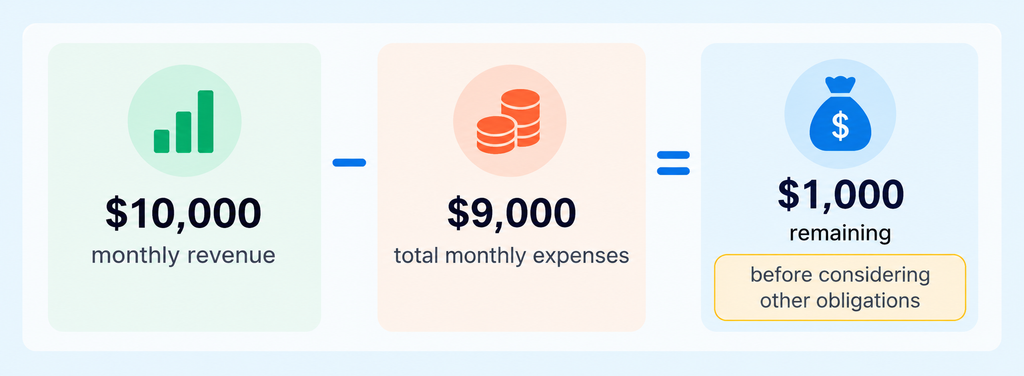
Understanding margin helps you decide whether you need to:
- Raise prices
- Reduce costs
- Improve scheduling
- Increase average job value
- Change your service mix
Use the Cleaning Business Profit Margin Calculator when reviewing your numbers:
Step 15: Add Systems Before You Add Complexity
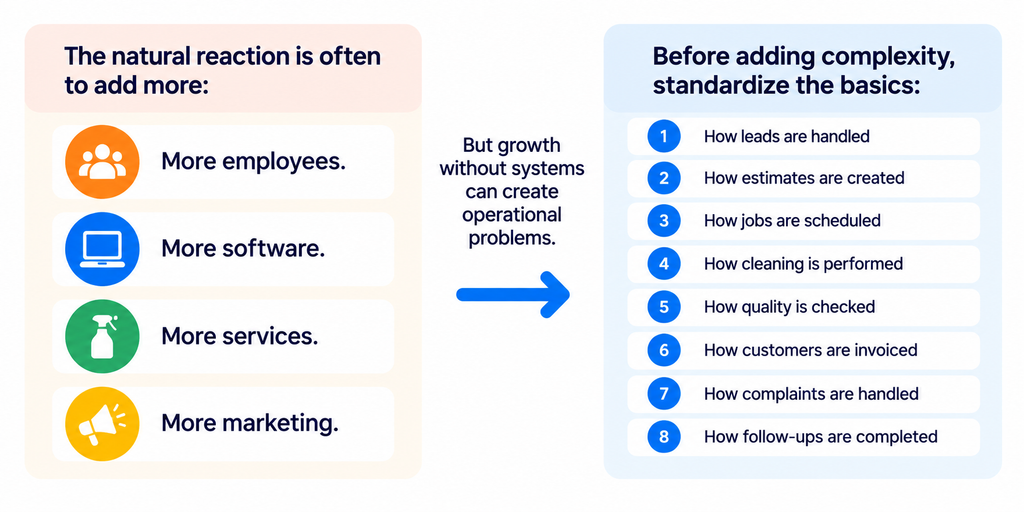
These processes make it easier to eventually delegate work.
Step 16: Hire When the Business Can Support It
Hiring can increase capacity, but it also introduces additional cost and responsibility.
Before hiring, understand why you need another cleaner.
Possible reasons include:
- You are consistently turning away profitable work
- Your schedule is at capacity
- You want to stop performing every cleaning yourself
- Existing demand can support additional labor
Do not hire simply because having employees makes the business feel more established.
The economics need to work.
When you do hire, documented checklists, pricing systems, scheduling processes, and quality standards become much more important.
Step 17: Use Software When It Solves a Real Problem
Software can help cleaning businesses manage:
- Scheduling
- Customer information
- Estimates
- Invoices
- Payments
- Team assignments
- Automated reminders
- Recurring jobs
But software should solve an operational problem rather than become another startup expense.
A solo cleaner with a handful of customers may not need the same system as a company coordinating several crews.
As your operation becomes more complex, compare tools based on the workflows you actually need.
Our comparison covers seven options:
Best Cleaning Business Software: 7 Tools Compared
https://getopsbutler.com/best-cleaning-business-software/
A Simple Cleaning Business Launch Checklist
Before taking your first paying job, make sure you have addressed the essentials.
You do not need a perfect business before getting your first client.
You need a business that is ready to deliver the service professionally.
What Should You Focus on First?
If all 17 steps feel overwhelming, simplify the launch into three stages.
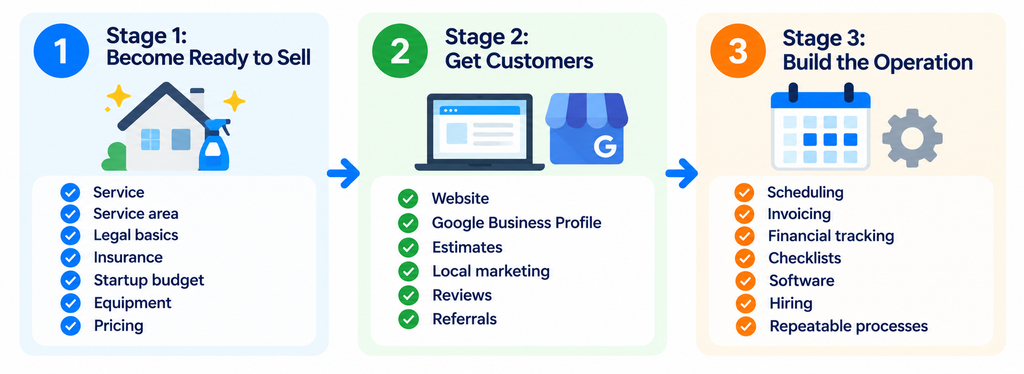
You do not have to build Stage 3 before you have Stage 1 customers.
Build systems as the business creates a real need for them.
Final Take
Starting a cleaning business does not require an enormous amount of capital or a complicated operation.
What matters is getting the fundamentals right.
- Choose a clear service.
- Understand your costs.
- Price for profit.
- Create a reliable cleaning process.
- Find customers.
- Make it easy to schedule, deliver, and pay for the service.
- Then improve the operation as demand grows.
The goal is not simply to start cleaning houses or offices.
It is to build a cleaning business that can consistently acquire customers, deliver good work, and remain profitable.