
A cleaning walkthrough is one of the best opportunities to understand a property before you send a quote.
It allows you to see the actual condition of the space, identify areas that may require extra work, estimate labor time, and clarify exactly what the customer expects.
Without a structured walkthrough, it is easy to miss details that later turn into additional labor, unexpected costs, or disagreements about the scope of work.
This guide shows you what to inspect during a cleaning walkthrough and includes a free checklist you can use when estimating residential or commercial cleaning jobs.
What Is a Cleaning Business Walkthrough?
A cleaning walkthrough is an inspection of a property before you finalize the scope, labor estimate, and price for a cleaning job.
During the walkthrough, you gather information about the property and the work required.
That may include:
- Property size
- Number and type of rooms
- Current condition
- Flooring and surface types
- Bathrooms and kitchens
- High-use areas
- Special cleaning requirements
- Access and security
- Supplies or equipment requirements
- Expected cleaning frequency
The goal is not simply to look around the building.
The goal is to collect enough information to create a realistic scope of work and estimate how much labor the job will require.
FIGURE 1 — CLEANING JOB WALKTHROUGH PROCESS

Why a Walkthrough Matters Before You Quote
Two properties with the same square footage can require very different amounts of work.
One may be relatively clean and maintained weekly.
Another may have heavy buildup, multiple bathrooms, difficult flooring, crowded workspaces, or special sanitation requirements.
If you quote both properties based only on size, your labor estimate may be wrong.
A walkthrough helps you identify the factors that can change:
- Labor hours
- Number of cleaners required
- Cleaning frequency
- Equipment needs
- Supply usage
- Initial cleaning time
- Recurring cleaning time
- Special service charges
- Overall price
This is especially important when pricing larger residential properties or commercial cleaning contracts.
For a deeper pricing framework, see our How to Price Commercial Cleaning Jobs.
Cleaning Business Walkthrough Checklist
A good walkthrough should follow the same basic process every time.
Instead of relying on memory, inspect the property systematically and record what you find.
The sections below cover the main areas to review.
1. Record the Basic Property Details
Start with basic information about the property and customer.
Record:
- Customer or company name
- Property address
- Contact person
- Phone or email
- Property type
- Approximate square footage
- Number of floors
- Requested service
- Requested cleaning frequency
- Preferred cleaning schedule
- Requested start date
For commercial properties, also note the type of facility.
Examples include:
- Office
- Retail store
- Medical or professional office
- School or daycare
- Warehouse
- Restaurant
- Multi-tenant building
Property type can affect cleaning requirements even when the buildings are similar in size.
2. Inspect the Current Condition
The current condition of the property can significantly affect the first cleaning.
Look for:
- Dust buildup
- Heavy soil
- Grease
- Stains
- Soap scum
- Hard-water buildup
- Trash accumulation
- Clutter
- Pet hair
- High-touch areas
- Neglected corners or edges
Avoid describing condition only as “clean” or “dirty.”
Record specific observations.
Instead of:
“Bathroom is dirty.”
Record:
“Heavy soap scum on two shower doors, visible hard-water buildup around fixtures, and floor edges require detailed cleaning.”
Specific notes make it easier to estimate labor and explain the scope later.
3. Identify Rooms and Cleaning Areas
Walk through the property in a consistent order.
For residential jobs, this may include:
- Bedrooms
- Bathrooms
- Kitchen
- Living areas
- Dining areas
- Hallways
- Stairs
- Entryways
- Laundry room
- Basement
- Home office
- Other requested areas
For commercial jobs, inspect areas such as:
- Offices
- Conference rooms
- Reception areas
- Restrooms
- Break rooms
- Kitchens
- Hallways
- Lobbies
- Workspaces
- Storage areas
- Stairwells
- Elevators
- Entrances
Record any areas that are excluded from the cleaning scope as well.
This can prevent confusion after service begins.
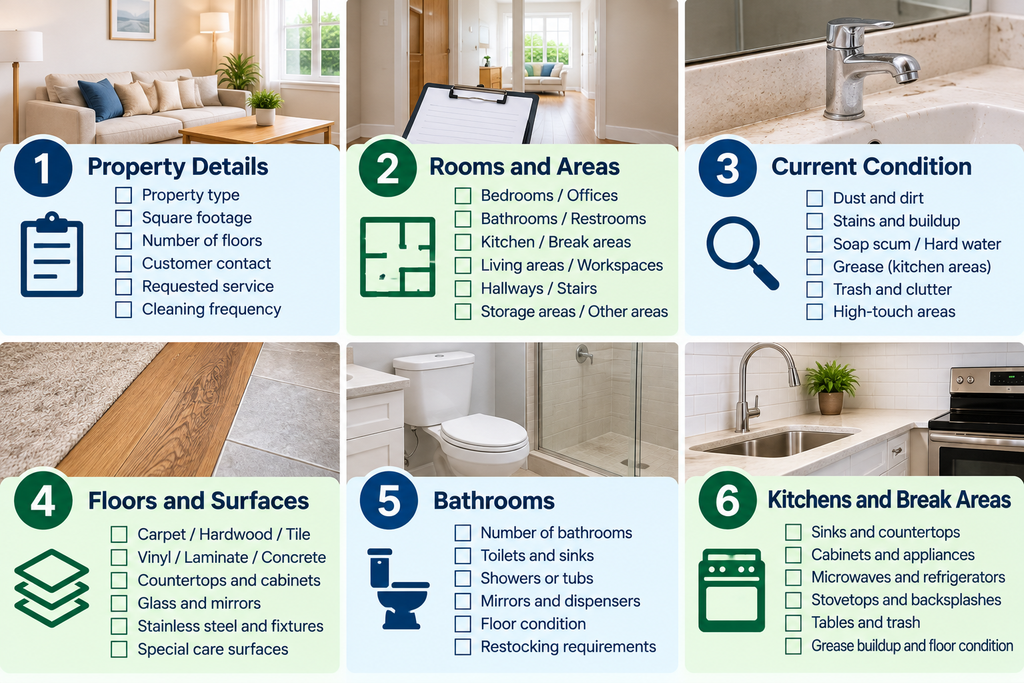
FIGURE 2 — WHAT TO CHECK DURING A CLEANING WALKTHROUGH
4. Check Floors and Surfaces
Different materials may require different cleaning methods, products, equipment, and labor time.
Record the major floor types.
Examples include:
- Carpet
- Hardwood
- Tile
- Vinyl
- Laminate
- Concrete
- Stone
Also inspect important surfaces such as:
- Countertops
- Stainless steel
- Glass
- Mirrors
- Wood
- Painted surfaces
- Fixtures
If a surface requires special care, record it during the walkthrough instead of discovering it after the job begins.
5. Inspect Bathrooms
Bathrooms can have a large impact on cleaning time.
Record:
- Number of bathrooms or restrooms
- Number of toilets
- Number of sinks
- Showers or tubs
- Mirrors
- Partition walls
- Dispensers
- Floor type
- Current condition
- Supply-restocking requirements
A commercial restroom with multiple stalls is very different from a small residential half-bath.
Do not count them as equivalent simply because both are labeled “bathroom.”
6. Inspect Kitchens and Break Areas
Kitchen areas can also vary significantly in cleaning difficulty.
Check:
- Sinks
- Countertops
- Cabinets
- Appliances
- Microwaves
- Refrigerators
- Stovetops
- Backsplashes
- Tables
- Trash
- Grease buildup
- Floor condition
Clarify whether appliance interiors are included.
Example scope note:
“Exterior appliance cleaning included. Refrigerator and oven interiors excluded unless separately requested.”
Small scope details like this can prevent disagreements later.
7. Identify Special Cleaning Requirements
Ask whether the customer expects services beyond routine cleaning.
Examples may include:
- Interior windows
- Carpet cleaning
- Floor polishing
- Deep cleaning
- High dusting
- Post-construction cleanup
- Move-in or move-out cleaning
- Appliance interiors
- Baseboards
- Wall washing
- Disinfection requirements
- Restocking consumables
Do not assume these services are automatically included.
Record them and determine whether they should be included in the standard scope or priced separately.
8. Check Access, Parking, and Security
Cleaning time is not the only operational issue.
You also need to understand how cleaners will access the property.
Ask about:
- Parking
- Building entry
- Keys
- Access cards
- Alarm systems
- Security codes
- Elevators
- Loading areas
- Locked rooms
- Restricted areas
- After-hours access
For example, a crew may lose significant time if parking is far from the building or supplies must be moved through several secured areas.
Those details can affect how efficiently the job can be completed.
9. Determine Who Provides Supplies and Equipment
Clarify what your company is expected to provide.
That may include:
- Cleaning chemicals
- Microfiber cloths
- Mops
- Vacuums
- Floor equipment
- Trash liners
- Paper products
- Soap
- Sanitizer
- Other consumables
For commercial contracts, the customer may provide some consumables while the cleaning company provides cleaning supplies and equipment.
Record the arrangement clearly.
Unexpected supply responsibilities can reduce the profitability of a job.
For a broader view of business costs, see our Cleaning Business Expenses guide.
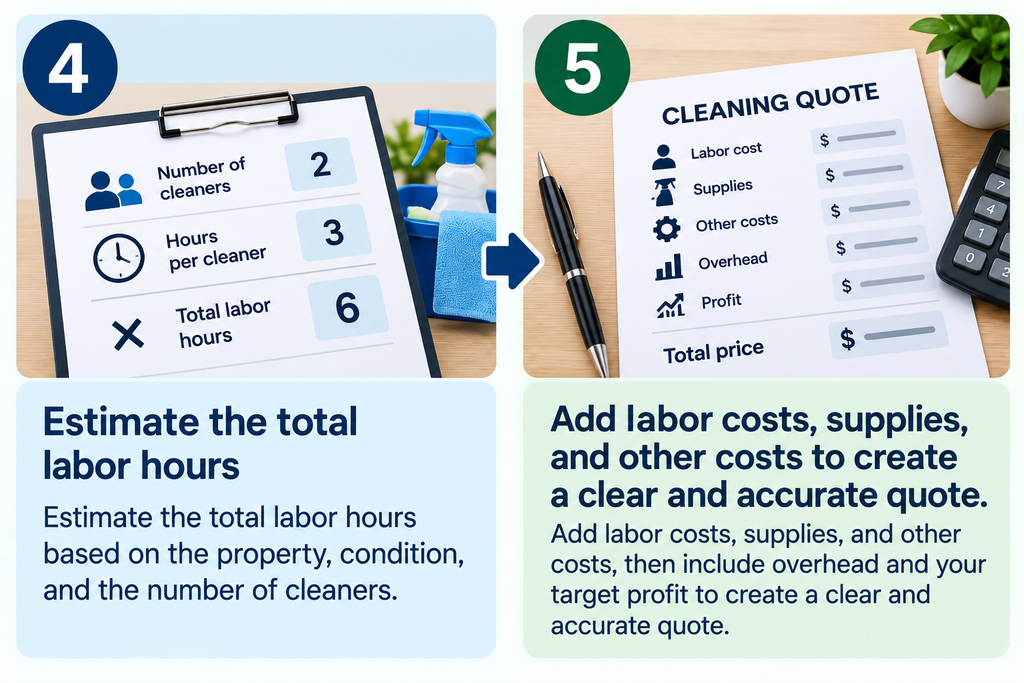
10. Estimate Total Labor Hours
After inspecting the property, estimate the labor required to complete the work.
Remember:
Total Labor Hours = Number of Cleaners × Hours per Cleaner
For example:
3 cleaners × 2 hours each
= 6 total labor hours
This distinction matters.
A three-person crew completing a property in two hours does not mean the job requires two labor hours.
It requires six.
You can use the Cleaning Business Labor Cost Calculator to convert estimated labor hours into an estimated labor cost.
First Cleaning vs. Recurring Cleaning
The first cleaning may require more labor than future visits.
A property that has not been professionally maintained may require additional time for:
- Heavy buildup
- Detail cleaning
- Baseboards
- Fixtures
- Corners and edges
- Initial organization of the cleaning process
Once the property reaches a maintenance level, recurring visits may require fewer labor hours.
Example:
Initial cleaning estimate:
8 labor hours
Recurring cleaning estimate:
5 labor hours per visit
If there is a meaningful difference, quote or document the initial cleaning separately from recurring service.
Estimate Labor Before Setting the Price
Avoid choosing a price first and then trying to make the labor fit the number.
A stronger sequence is:
FIGURE 3 — WALKTHROUGH TO CLEANING QUOTE
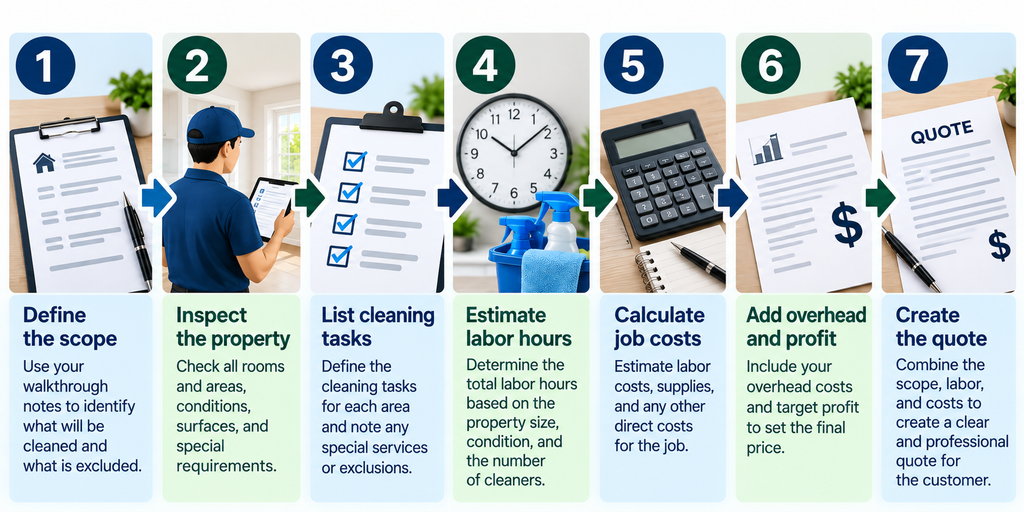
The walkthrough gives you the information needed to estimate the work.
The labor estimate helps you understand the cost.
Only then should you finalize the price.
For residential jobs, see How Much to Charge for House Cleaning.
For commercial jobs, use our Commercial Cleaning Pricing Guide.
Turn Walkthrough Notes Into a Scope of Work
Once the walkthrough is complete, convert your notes into a clear scope.
The scope should identify:
- Areas to be cleaned
- Tasks to be completed
- Cleaning frequency
- Special services
- Excluded services
- Supply responsibilities
- Access requirements
- Any customer-specific instructions
Do not rely on verbal agreements for important scope details.
A written scope makes it easier for both the customer and the cleaning team to understand what is included.
It can also become the basis for your internal cleaning procedures.
See our Cleaning Business SOP guide for creating repeatable operating procedures.
Use the Walkthrough to Create the Quote
Once you understand the property, scope, and estimated labor, you can prepare the customer quote.
A simple process is:
1. Define the scope
2. Estimate total labor hours
3. Estimate labor cost
4. Add supplies and other job costs
5. Account for overhead
6. Add your target profit
7. Create the customer quote
Your quote should clearly communicate what the customer is buying rather than showing only a price.
Use our Cleaning Business Quote Template to turn your estimate into a professional customer-facing quote.
Free Cleaning Business Walkthrough Checklist
You do not need to recreate your walkthrough notes from scratch for every prospect.
Use the free OpsButler Cleaning Business Walkthrough Checklist to record the information covered in this guide.
The downloadable checklist will include:
- Customer and property information
- Service requirements
- Property condition
- Room and area inspection
- Floor and surface types
- Bathroom details
- Kitchen and break-area details
- Special cleaning requirements
- Access and security
- Supplies and equipment
- Labor-hour estimate
- Initial vs. recurring cleaning estimate
- Additional notes
Use the same checklist for every walkthrough and adapt individual sections to the type of property you are quoting.
Common Cleaning Walkthrough Mistakes
1. Quoting Based Only on Square Footage
Square footage is useful, but it does not tell you everything about the condition or complexity of a property.
2. Failing to Document the Current Condition
If a property requires heavy initial cleaning, record it before sending the quote.
3. Forgetting Special Requests
Small additional services can add significant labor when they accumulate.
4. Confusing Job Duration With Labor Hours
Two cleaners working three hours represent six labor hours.
5. Not Clarifying Exclusions
If windows, appliance interiors, carpet cleaning, or other services are excluded, document that clearly.
6. Ignoring Access and Parking
Operational delays can affect the real amount of time required to service the property.
7. Sending a Price Without a Clear Scope
A price without a defined scope can create different expectations between the customer and cleaning company.
Build a Repeatable Estimating Process
The goal is not to make every walkthrough complicated.
The goal is to make it consistent.
A repeatable process helps you collect the same important information before every quote.
Using the same walkthrough checklist each time makes it easier to spot missing information, compare similar jobs, and keep labor estimates consistent as your cleaning business grows.
Once the customer accepts the quote, the information collected during the walkthrough can also support:
- Scheduling
- Cleaner training
- Job instructions
- Cleaning checklists
- Quality control
- Future price reviews
The walkthrough therefore becomes more than a sales activity.
It becomes the starting point for how the job is priced, documented, and eventually delivered.
Final Take
A cleaning walkthrough helps you replace guesswork with information.
Inspect the property systematically.
Document its condition.
Clarify the scope.
Identify special requirements.
Estimate total labor hours.
Then use those numbers to build the price and quote.
The more consistent your walkthrough process becomes, the easier it is to compare jobs, estimate labor accurately, communicate expectations, and protect the profitability of your cleaning business.
Use the free Cleaning Business Walkthrough Checklist before your next estimate so the important details do not depend on memory.